
Video personalization has moved beyond “Hi {FirstName}” gimmicks – but most marketers are still treating it like a novelty.
We’re at an inflection point. By 2022, internet video traffic had already reached 82% of all consumer internet traffic, and that dominance has only intensified. Engagement rates for personalized video consistently run 2-3x higher than static formats, with some implementations achieving engagement rates up to 5x higher than generic video content. Yet when I talk to CMOs, most are either running small pilots or avoiding the technology entirely because they think it won’t scale.
That assumption is costing them millions in customer lifetime value. The data is unambiguous: personalized after-sales videos create emotional connections that lead to 306% higher customer lifetime value compared to generic communications.
The Banking Breakthrough: Where Personalization Proved Its Enterprise Value
The banking sector figured this out first. When 42% of consumers say they’d only call their bank as a last resort, digital communication isn’t just convenient – it’s the primary relationship channel. Forward-thinking banks have deployed personalized video across the entire customer lifecycle: onboarding sequences that reduce confusion and support costs by 20%, account review videos that explain financial positions visually rather than through dense dashboards, and proactive alerts that build trust through transparent communication.
The financial services sector has documented remarkable results. Leading banks sending personalized videos explaining credit card rewards and offers saw 40% higher response rates compared to static communications. When banks implement personalized onboarding videos, completion rates increase dramatically – video content is 95% more likely to be retained than text-based instructions. The impact extends beyond engagement: McKinsey research highlights that personalized communication can reduce service costs by up to 20%, creating a compelling business case that goes far beyond marketing metrics.
These aren’t marginal improvements. Financial institutions using personalized video for customer communications report that 80% of customers are more likely to engage when brands offer personalized experiences. For an industry where customer acquisition costs continue rising and differentiation becomes increasingly difficult, personalized video represents both a customer experience advantage and an operational efficiency play.
The Business Model Transformation That Makes Scalability Possible
The breakthrough isn’t the technology – it’s the business model shift.
Traditional video production doesn’t scale. One master video, one message, one audience. The ROI calculation breaks down quickly when you consider the production cost versus the limited reach. A single professionally produced video might cost $15,000 in production and promotion, reaching perhaps 10,000 targeted viewers. But personalized video inverts this equation entirely: you build the creative infrastructure once, then generate infinite variations automatically by integrating with CRM data.
The scalability metrics tell a transformative story. Many businesses have scaled from creating thousands to well over a million personalized videos per campaign. What once took multiple weeks of production time can now be completed within hours – automation and rendering solutions regularly reduce production times by as much as 90%. The cost dynamics shift dramatically: companies report cost reductions often exceeding 75% per video, enabling stronger returns on investment and creating opportunities for campaigns that would have been economically impossible under traditional production models.
This is happening right now in retail. Companies are moving from weekly circular production that took days and dozens of designers to systems that generate thousands of store-specific, inventory-aware versions in hours. The personalization isn’t superficial – entire product selections change based on local inventory, pricing adjusts for regional markets, and promotional strategies respond to real-time demand signals.
The Technical Architecture That Enables Million-Video Campaigns
What makes this work at enterprise scale requires understanding the technical infrastructure that differentiates personalized video platforms from traditional video production.
Cloud-based rendering handles peak loads without infrastructure bottlenecks.
When campaigns scale from thousands to millions of videos, traditional on-premises infrastructure becomes a constraint. Cloud rendering platforms provide elastic scaling, allowing dynamic allocation of more CPUs during peak viewing periods. This scalability ensures production teams aren’t forced to choose between speed and volume – they can deliver both simultaneously.
Template-driven creative ensures brand consistency across millions of variations.
The most effective personalized video platforms employ modular design approaches – breaking videos into interchangeable scenes or segments that can be swapped based on viewer data. A software company might create different feature demos based on the user’s industry, dynamically inserting the relevant clip depending on the viewer’s CRM record. Template engines allow creators to design video templates with placeholders for dynamic elements – text fields, images, audio clips, or video segments – that are replaced with personalized content at render time.
API integration means data flows automatically from systems of record without manual intervention.
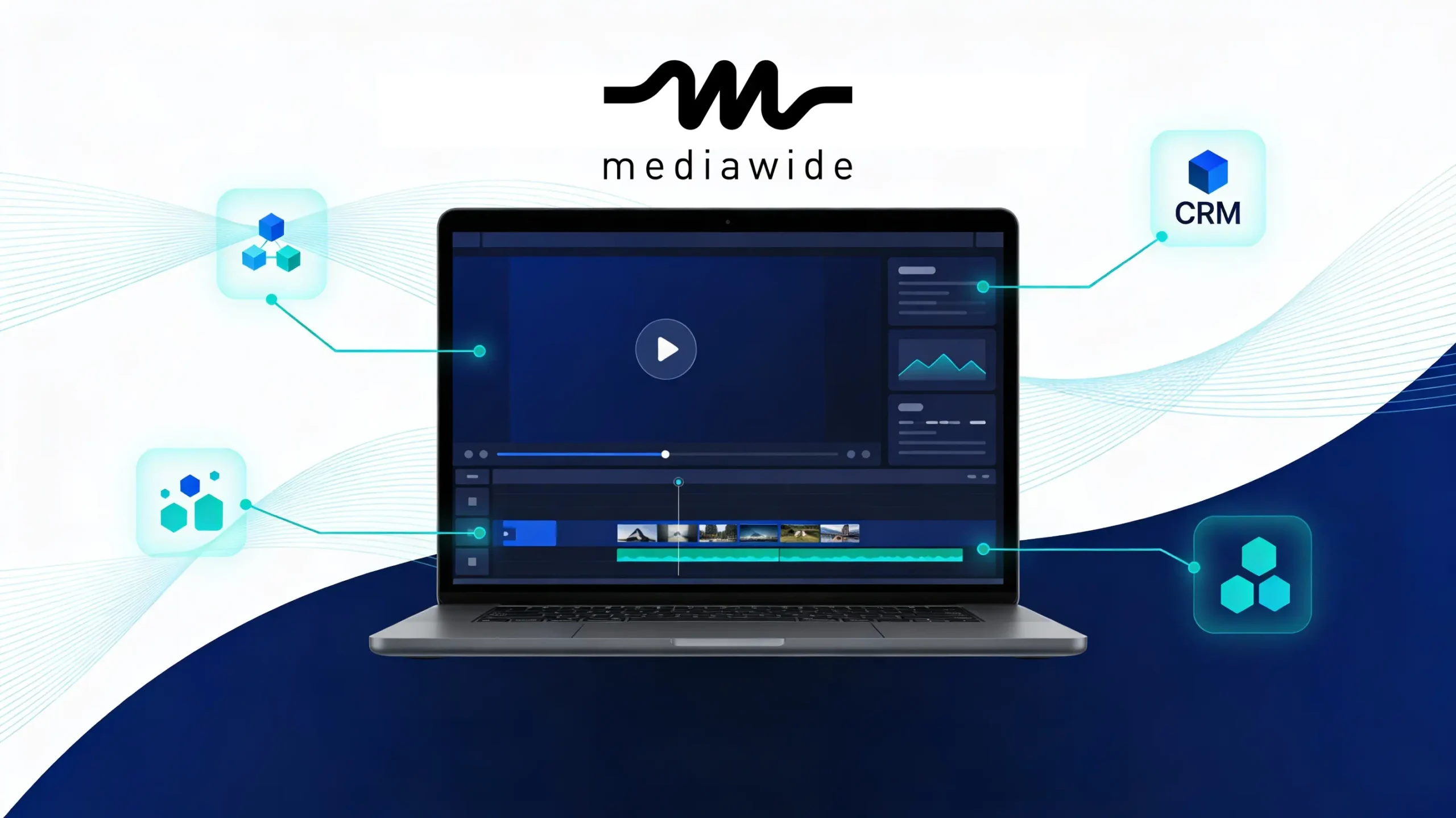
Modern personalized video platforms connect seamlessly with CRMs, marketing automation platforms, and data warehouses. An API can pull data from a CRM to generate personalized video content for every customer segment automatically. This integration is crucial for both production efficiency and measurement – video engagement data flows back into CRM systems, enabling sophisticated lead scoring and sales enablement workflows
Quality assurance becomes algorithmic rather than artisanal.
AI-driven quality control systems automatically evaluate video, audio, and subtitle quality, reducing content rejection rates and improving compliance with standards. For large-scale operations, AI quality control runs lightweight prefilters to quickly scan all content and flag suspicious segments, while deeper neural networks analyze flagged segments in detail. This hierarchical architecture balances processing speed and accuracy, enabling near real-time operation without overwhelming infrastructure.
The Strategic Transformation: From Broadcast to Dialogue
But the strategic shift matters more than the technical architecture. Personalization transforms video from a broadcast medium into a dialogue medium. Every video becomes a data collection point. View-through rates signal interest. Click-through actions demonstrate intent. Drop-off points reveal friction.
The engagement metrics available from personalized video platforms provide granular insights previously impossible with traditional video. Marketers can track exactly where viewers lose interest or rewatch specific segments through engagement curves. They can identify confusing sections marked by sudden drops in viewership, or highly engaging moments indicated by peaks or rewatches. This data informs not just video optimization but broader content strategy.
Click-through rates for personalized videos reach levels that dwarf traditional formats. While standard video marketing might generate 1.5-3% click-through rates, personalized videos achieve dramatically higher performance. Personalized videos have been documented with 16x higher click-through rates than standard emails. In one particularly impressive case study, Marketo used personalized videos in their email campaigns and saw a 200% increase in click-through rates, proving just how powerful the medium becomes when it feels personal.
Conversion metrics tell an equally compelling story. Personalized videos can increase conversion rates by up to 20% compared to generic formats. The impact extends across the funnel: personalized video emails boost conversions by up to 80%, while landing pages with video content see 80% higher conversion rates than those without.
We recently worked with a client scaling from thousands to over a million personalized videos per campaign. The production volume increase was dramatic, but what changed their business was the feedback loop – suddenly, they had granular data about what messages resonated with which customer segments, enabling iterative improvement that compounded over time.
Real-World Results: The Evidence Base for Personalization
The business impact of personalized video extends across industries and use cases, with documented results that make the strategic case compelling:
Consumer brands are seeing engagement that transforms campaign economics.
When Cadbury launched personalized video campaigns using data-driven content that matched consumers with chocolate flavors based on their preferences, results exceeded traditional marketing benchmarks. A remarkable 90% of viewers watched their personalized video to completion – a completion rate that would be extraordinary for any video format. The campaign achieved a 65% click-through rate with campaign recipients and a 33% conversion rate from viewers who completed a subsequent promotion form.
B2B sales teams are multiplying response rates through personalized outreach.
Sales professionals using personalized video in their prospecting see response rates more than triple. One documented case study showed personalized video messages achieving 40% higher open rates, 37% higher click rates, and a 216% higher response rate compared to text-based emails. The information sent via video circulates to more members of the buying committee, reaching decision makers because it suits busy executives who don’t have time to read lengthy emails and documents.
Financial services firms are accelerating deal velocity and improving qualification.
HubSpot utilized personalized video to improve lead conversion rates, integrating personalized video messages into email campaigns that addressed recipients by name and included content relevant to their industry and specific pain points. The results: a 40% higher conversion rate for leads who received personalized video messages compared to those who received standard emails, and a 30% increase in meeting bookings with sales representatives.
Marketing automation platforms are proving the compound effect of video-based lead scoring.
When companies integrate video engagement data with marketing automation platforms like Adobe Marketo, they create sophisticated behavior-based lead scoring models. One case study showed that adding video engagement as a scoring category increased the MQL-to-SQL conversion rate by 45%, with pipeline velocity for video-qualified leads moving 20% faster than for those qualified by other means.
The Organizational Readiness Challenge: Why Technical Capability Isn’t Enough
The barrier isn’t technical capability anymore. It’s organizational readiness. Teams need to think in systems rather than campaigns. Creative becomes modular and data-driven. Success metrics shift from vanity metrics to business outcomes.
Organizational readiness encompasses several critical dimensions. At its core is a leader who drives a data-first culture – a champion who doesn’t just talk about democratizing data but ensures employees can access, share, and apply insights across teams. This sponsor rallies the entire organization around a clear digital vision, breaking down silos and empowering employees at every level to contribute.
The shift to modular creative systems represents a fundamental change in how marketing teams operate. Traditional creative production treats each asset as unique artwork – need a Facebook post, an Instagram story, and a display banner? That’s three separate design projects, three rounds of approvals, three opportunities for inconsistency. Modular systems flip this approach: design once, deploy everywhere. When organizations like Unilever needed to deliver promotional content for more than 400 SKUs across retailers and geographies, they built modular creative engines connecting product data directly to design templates, achieving over 60% reduction in production timeline with instant updates when product information changes.
The transition requires new capabilities across the value chain. Smart, connected products and personalized video platforms need technology savviness, data analytics expertise, integrated teams with varied work styles, and agile project management. Organizations succeeding with these implementations focus on solving specific business problems rather than chasing technology for its own sake. They identify high-volume, low-complexity workflows where personalization can deliver immediate value, then scale systematically across the enterprise.
Cross-functional collaboration becomes essential. Brand managers understand consistency requirements. Creative directors know what elements drive campaign effectiveness. Marketing teams understand deployment requirements. Operations teams understand production realities. The most effective approaches involve these stakeholders from the beginning, starting with pilot programs that build confidence and capability before tackling complex creative challenges.
The Competitive Dynamics: First-Mover Advantages in the Age of Personalization
The companies that figure this out in 2026 will have an engagement advantage that competitors simply can’t match with generic content. The advantages compound in several ways:
Data accumulation creates self-reinforcing improvement cycles.
Continuous learning systems capture feedback loops from user interactions, improving accuracy and capabilities through real-world use rather than static training. Organizations leveraging these systems gain compounding advantages over time – each campaign generates data that improves the next, creating a widening gap between leaders and laggards.
Customer expectations shift based on best-in-class experiences.
Once consumers experience truly personalized video from one brand, their expectations rise for all interactions. Personalized CTAs perform 202% better than generic ones, and over 55% of consumers prefer personalized AI-generated videos over generic videos. The bar continues rising, making it increasingly difficult for brands still relying on one-size-fits-all content to compete for attention.
Operational efficiency creates resource allocation advantages.
When organizations reduce video production costs by 75% per asset while simultaneously improving performance, they can either reinvest savings into more content volume or reallocate resources to higher-value activities. Competitors stuck with traditional production economics face a lose-lose choice: match the personalization leader’s volume at unsustainable cost, or accept lower engagement and conversion rates.
Integration depth creates switching costs and competitive moats.
As personalized video systems integrate more deeply with CRM platforms, marketing automation tools, and analytics infrastructure, they become embedded in operational workflows. Organizations achieving this integration see video engagement data automatically triggering sales alerts, populating lead scores, and determining nurture stream enrolment. Competitors attempting to replicate these capabilities face not just technology implementation challenges but organizational change management hurdles.
Measuring Success: Shifting From Content Metrics to Business Systems
The question isn’t whether to personalize – it’s whether you can afford not to. But measuring success requires a fundamental shift in how organizations think about video performance.
Traditional video metrics focus on vanity indicators: views, likes, shares. These engagement signals matter, but they don’t directly connect to business outcomes. Personalized video enables measurement frameworks that tie directly to revenue and customer value.
Pipeline velocity and deal acceleration.
When video engagement data integrates with CRM systems, organizations can measure how video consumption correlates with deal progression. Do opportunities that engage with personalized video move through stages faster? Companies implementing video-based lead scoring report pipeline velocity improvements of 20% for video-qualified leads compared to those qualified through other means.
Customer lifetime value attribution.
Video’s impact extends beyond initial conversion. Personalized after-sales videos create emotional connections that translate directly to retention and expansion. Organizations measuring CLV impact document 306% higher lifetime value for customers receiving personalized video communications. This metric shifts the ROI calculation from campaign-level returns to multi-year customer value.
Support cost reduction and self-service adoption.
When complex information is delivered through personalized video rather than text-based FAQs or phone support, organizations see measurable reductions in support tickets and call volume. Banking implementations report 20% reductions in service costs through personalized video communication, as customers successfully complete processes without requiring human intervention.
Cross-sell and upsell conversion rates.
The success rate of selling to existing customers (60-70%) vastly exceeds that for new customers (5-20%). Personalized videos promoting accessories or complementary products based on purchase history increase conversion likelihood while simultaneously boosting customer lifetime value. Organizations can directly measure the revenue attributed to personalized video recommendations versus control groups receiving generic suggestions.
Content-to-pipeline attribution.
Multi-touch attribution models incorporating video engagement as trackable touchpoints provide far more accurate understanding of which content assets truly influence conversions. This enables smarter budget allocation, focusing resources on video content types and personalization strategies that demonstrably drive revenue rather than relying on proxy metrics like views or shares.
The 2026 Imperative: Building Personalization Infrastructure Now
Video content is projected to make up over 82% of all consumer internet traffic, making video literacy and video personalization capability fundamental requirements rather than differentiating advantages. The organizations that will thrive in this environment are those building personalization infrastructure today.
The implementation path involves several key phases. Start by identifying high-impact use cases where personalization can demonstrate clear business value – customer onboarding, product recommendations, abandoned cart recovery, or account review communications. These focused implementations build organizational capability and demonstrate ROI before scaling to broader applications.
Invest in the technical infrastructure that enables scale: cloud-based rendering capabilities, template management systems, CRM and marketing automation integrations, and analytics platforms that close the feedback loop. Organizations attempting to scale personalized video without proper infrastructure hit bottlenecks that limit both production volume and measurement sophistication.
Develop modular creative systems that separate content from structure. Your brand guidelines, design principles, and creative strategy remain constant – the framework. The content layers – product details, offers, localized messaging – populate dynamically within that framework. This architecture allows creative teams to think systematically about video construction rather than designing individual assets.
Build cross-functional workflows that break down silos between creative, data, technology, and business teams. Personalized video at scale requires collaboration across traditional organizational boundaries, with clear ownership and accountability for both production and performance.
Establish measurement frameworks that connect video engagement to business outcomes from day one. Implement the tracking, attribution, and analytics capabilities that transform video from a creative exercise into a business system. Organizations that treat video as a content metric rather than a business system miss the strategic opportunity personalization creates.
The companies building this capability now – in 2026 – are creating competitive advantages that will compound over years. Those waiting until personalization becomes “standard practice” will find themselves perpetually behind organizations that have years of data, refined processes, and organizational muscle memory.
Are you measuring video performance as a content metric or a business system? The answer to that question may determine whether your organization leads or follows in the next era of customer engagement.


Leave a Reply